When someone gets arrested in Los Angeles County, the next question is usually simple: how do we get them out? This guide explains bail, bail bonds, costs, timelines, and common delays in easy way. (General information only, not legal advice.)
What bail means
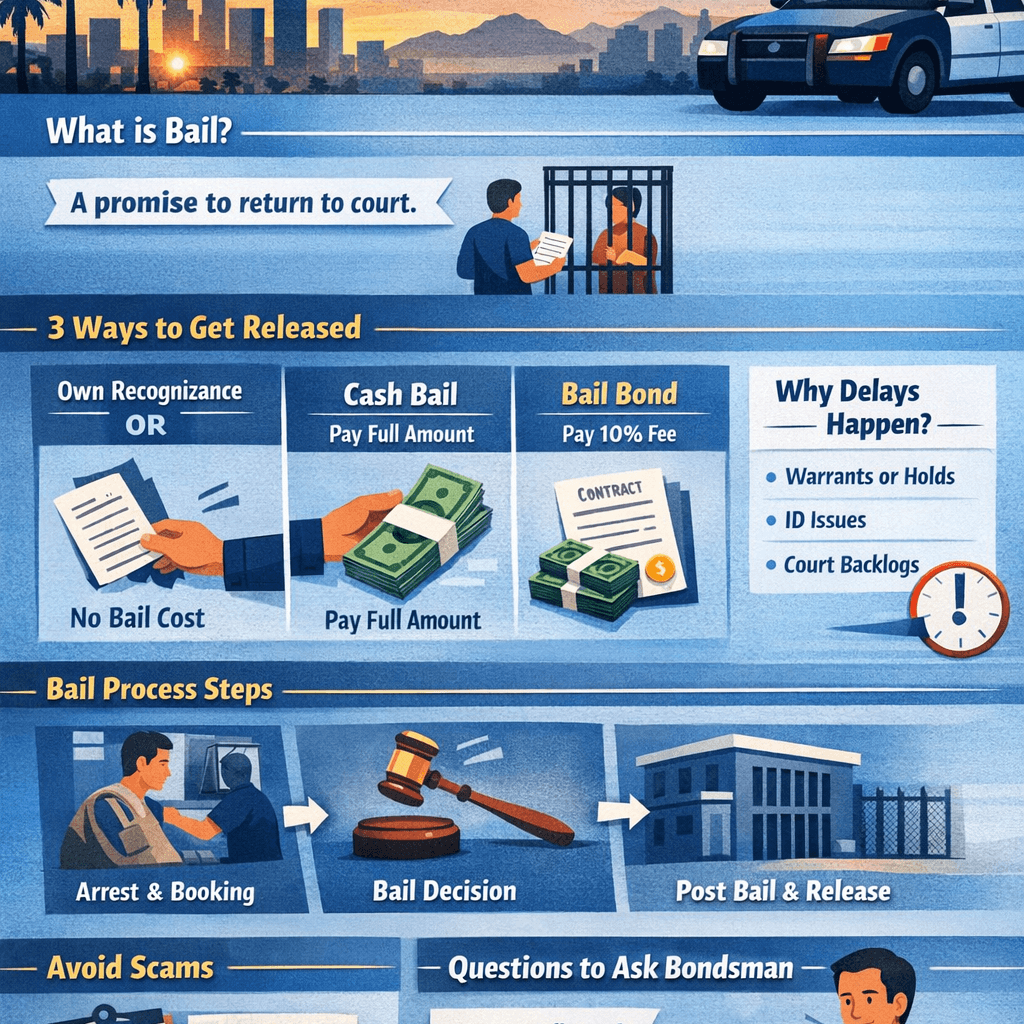
Bail is a promise to return to court. The court allows a person to leave jail while the case is still going on, as long as there is a guarantee they will come back for hearings.
In Los Angeles County, release decisions can happen in different ways depending on the charge and the person’s situation. Sometimes bail is set as money. Sometimes release can happen without paying bail, with conditions like check-ins or a court date notice.
Important thing to know about Los Angeles County
Los Angeles County does not treat every case the same. For many lower-level, non-violent arrests, the system may allow a person to be released before seeing a judge under certain rules. In other cases, a judge must review the case first. And in serious cases, bail can be high or release can be denied.
So it’s normal if one person gets released quickly while another person with a different charge stays in custody.
How bail amount is decided
Bail can be decided using:
- A standard bail schedule (common bail amounts for common charges)
- Pre-arraignment release rules (release options before the first court hearing)
- A judge’s order at the first court appearance or later
Judges usually think about two main things:
- Will the person come back to court?
- Is the person a safety risk to others or the community?
3 main ways someone gets released
1) Release without paying bail (Own Recognizance / OR)
This means the person is released based on their promise to appear in court. Sometimes the court or the system may add conditions like:
- staying away from certain places or people
- check-ins
- no travel
- following a court date notice strictly
2) Cash bail (pay the full bail amount)
You pay the full amount set for bail. If the person attends court as required, the money is usually returned at the end of the case (some small deductions or delays can happen depending on the process).
3) Bail bond (pay a smaller fee instead of full bail)
A bail bond company posts the full bail for you. You pay the bail bond company a premium (fee). In California, this is commonly around 10% of the bail.
Example:
- Bail is $20,000
- Bail bond fee is commonly about $2,000 (plus possible extra costs)
Important: The premium is usually not refundable, because it’s the price of the service.
What you should have before calling for help
If you’re trying to arrange a release, try to collect:
- Full legal name
- Date of birth (if possible)
- Where they are being held (which station/jail)
- Booking number (if you can get it)
- Charges (if known)
Even if you only have the name and date of birth, many services can still locate the person.
How the process usually works (simple timeline)
Step 1: Arrest and booking
After arrest, the person is processed. This can take hours. Booking includes identity checks, fingerprints, and paperwork.
Step 2: Bail or release decision
Depending on the case, the person may:
- be released quickly with a citation,
- be booked and then released,
- need a judge review,
- or have a bail amount set.
Step 3: Posting bail (if needed)
If bail is required, you can post:
- full cash bail, or
- a bail bond through a company.
After posting bail, release is not instant. The jail still must complete discharge processing.
Bail bonds in simple words
A bail bond is a deal between you and the bail bond company:
- The company guarantees the full bail to the court.
- You pay the company a premium (fee).
- Usually, you must sign as a co-signer (responsible person).
- Sometimes you must give collateral.
What is collateral?
Collateral is something valuable used as security. It may include:
- property (house equity)
- vehicle title
- savings or other assets
Collateral rules vary by company and risk level. If the person follows court rules and the case ends properly, collateral is usually returned.
What can go wrong if someone misses court?
If the person misses a court date, the court can issue a warrant and the bond can be at risk.
This can lead to:
- the bond company trying to locate the person
- the co-signer being responsible for major costs
- possible loss of collateral
That’s why court dates must be taken seriously.
A county program that may help in some cases
Los Angeles County also has programs that may review certain cases and help with release decisions, especially when charges are not filed yet or the case is still under review. Not everyone qualifies, but if you’re unsure, it’s worth asking about release review options when speaking to the jail, attorney, or a trusted local support service.
Common reasons release takes longer (even after bail is posted)
Even when everything is paid, delays happen. The most common reasons are:
- Another agency hold (warrant, probation/parole hold, or other hold)
- The person has more than one case
- Identity verification problems
- Jail staffing and shift changes
- Paperwork delays and system backlogs
- Late-night posting or weekend processing delays
If bail is posted and release is still not happening, the first thing to check is:
“Is there any hold blocking release?”
How to avoid scams and bad deals
This is important because people often panic during arrests.
Use these safety rules:
- Don’t pay anyone who refuses to explain fees clearly.
- Ask for written paperwork before paying.
- Be careful with “guaranteed release in 30 minutes” claims (no one can promise jail processing speed).
- Don’t share personal info with random callers or texts.
- Make sure the business is real and has proper licensing if they are offering bail bond services.
Questions to ask a bail bond company (quick checklist)
Before you pay, ask:
- What is the total premium and any extra charges?
- Do you require collateral? If yes, what kind?
- When and how is collateral returned?
- What are the co-signer responsibilities?
- Will you give copies of all signed documents?
- What happens if the court changes dates or the person is moved to another location?
If they can’t answer clearly, don’t rush.
Quick FAQ
Is bail always needed in Los Angeles County?
No. Some cases may qualify for release without paying bail. Others require bail or judge review.
Is the bail bond fee refundable?
Usually, no. It’s a service fee.
Can bail change later?
Yes. A judge can raise it, lower it, or change conditions depending on the case.
Final notes
If you’re dealing with an LA County arrest, try to stay focused and move in this order:
- Confirm where the person is held and get the booking info
- Ask if release is possible without bail or under early release rules
- If bail is required, compare cash bail vs. bail bond carefully
- Be patient after posting—release can still take hours