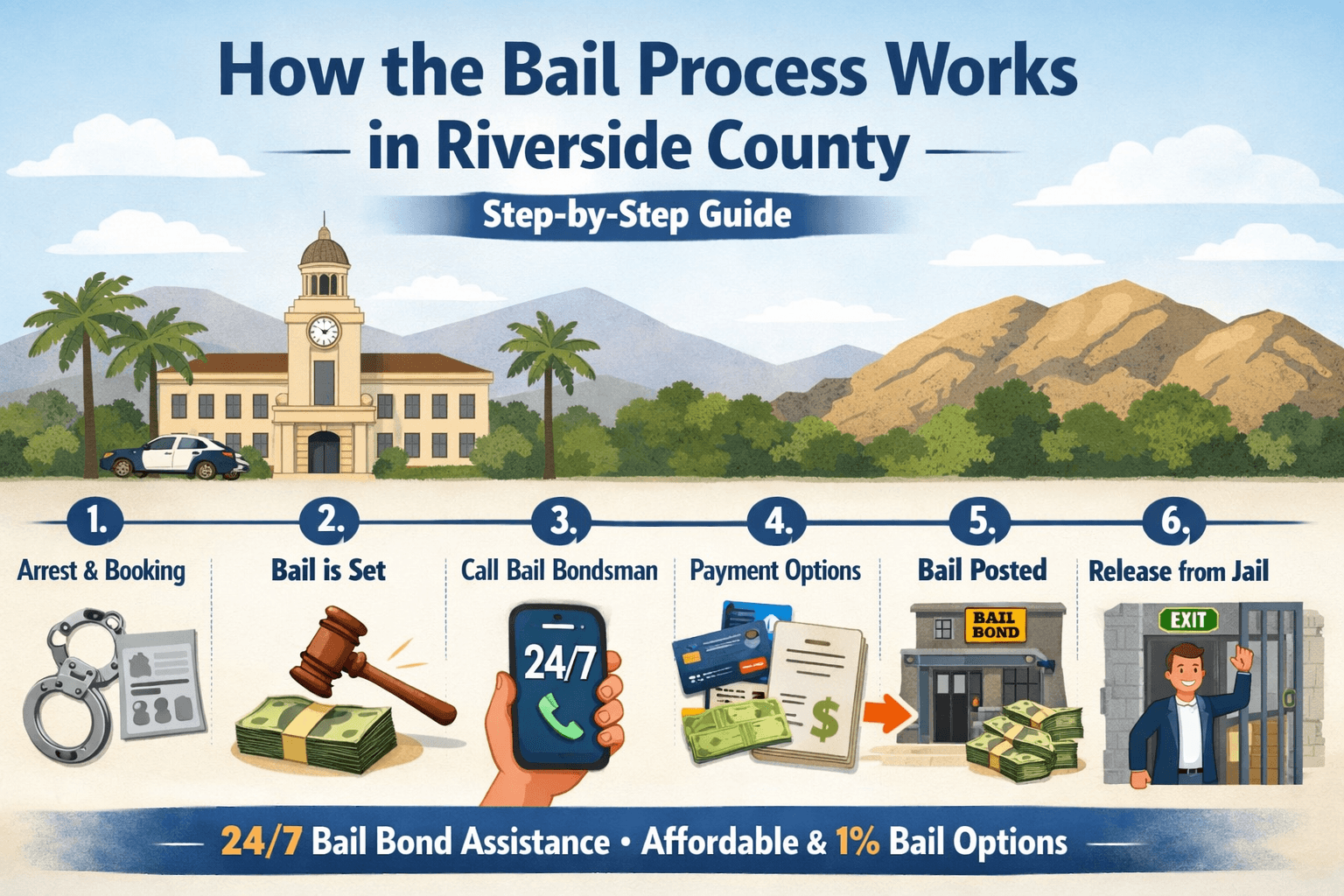
How the Bail Process Works in Riverside County (Step-by-Step Guide)
If someone you care about is arrested in Riverside County, the situation can feel overwhelming. The jail system moves fast, and families often do not know what to expect. Understanding how the bail process works can help you stay calm and take the right steps quickly.
This step-by-step guide explains everything in simple terms — from arrest to release — so you know exactly what happens and how a bail bondsman can help.
Step 1: The Arrest
The bail process begins when a person is arrested. Law enforcement officers take the individual into custody and transport them to a local Riverside County jail facility.
An arrest may happen for many reasons, including:
- Misdemeanor charges
- Felony charges
- Warrants
- Probation violations
After arrival at the jail, the booking process begins.
Step 2: Booking Process
Booking is the official intake procedure at the jail. During this stage:
- Personal information is recorded
- Fingerprints are taken
- A mugshot is taken
- Charges are confirmed
- Bail is assigned
This process can take several hours depending on how busy the jail is.
Once booking is complete, the bail amount becomes available.
Step 3: How Bail Is Set in Riverside County
Bail is the amount of money required to secure temporary release from jail while waiting for court.
In Riverside County, bail is usually determined by:
- The county bail schedule
- The seriousness of the charge
- Prior criminal history
- Flight risk
For example, minor offenses may have lower bail amounts, while serious felony charges may have much higher bail.
In some cases, a judge may adjust bail during a bail hearing.
Step 4: Your Bail Payment Options
After bail is set, there are generally three ways to secure release:
1. Pay Full Cash Bail
You can pay the full bail amount directly to the court. If the defendant attends all court dates, the money is refunded (minus possible court fees). However, full bail can be very expensive.
2. Property Bond
Property can sometimes be used as collateral. This process is slower and more complicated.
3. Use a Bail Bondsman
This is the most common option. Instead of paying the full bail amount, you pay a percentage to a licensed bail bondsman, who posts the full bail on your behalf.
Many families choose an Affordable Bail Bondsman Riverside County option because it reduces the financial burden.
Step 5: Contacting a Bail Bondsman
If you decide to use a bail bondsman, here is what typically happens:
You provide:
- Full legal name of the arrested person
- Date of birth
- Jail location
- Booking number (if available)
A 24/7 Bail Bondsman Riverside County service can begin the process immediately, even in the middle of the night.
Time matters. Acting quickly may reduce how long your loved one stays in custody.
Step 6: Understanding the Bail Bond Agreement
Before posting bail, you will sign a bail bond agreement. This document explains:
- The fee amount
- Payment terms
- Court attendance requirements
- Responsibilities of the defendant
Some agencies offer flexible options such as a Bail Bondsman Riverside County With Payment Plan, allowing families to spread payments over time.
There are also situations where a 1% Bail Bondsman Riverside County program may be available for qualified clients. Eligibility depends on the case and financial background.
Always review the agreement carefully and ask questions if something is unclear.
Step 7: Posting Bail at the Jail
Once paperwork is complete and payment arrangements are finalized, the bail bondsman posts bail with the jail.
This part of the process may take a few hours depending on:
- Jail workload
- Time of day
- Staffing levels
- Verification procedures
After processing, the defendant is released.
Step 8: Release From Jail
Release times in Riverside County can vary. Some releases happen within a few hours, while others may take longer if the jail is busy.
After release, the defendant must:
- Attend all court dates
- Follow court conditions
- Stay in contact if required
Failure to appear in court can result in serious consequences.
What Happens If Someone Misses Court?
When a defendant does not appear in court:
- A bench warrant may be issued
- Bail can be revoked
- Additional charges may be added
- The bond may be forfeited
This is why court attendance is extremely important.
A professional bail bondsman often provides reminders and guidance to help prevent missed court dates.